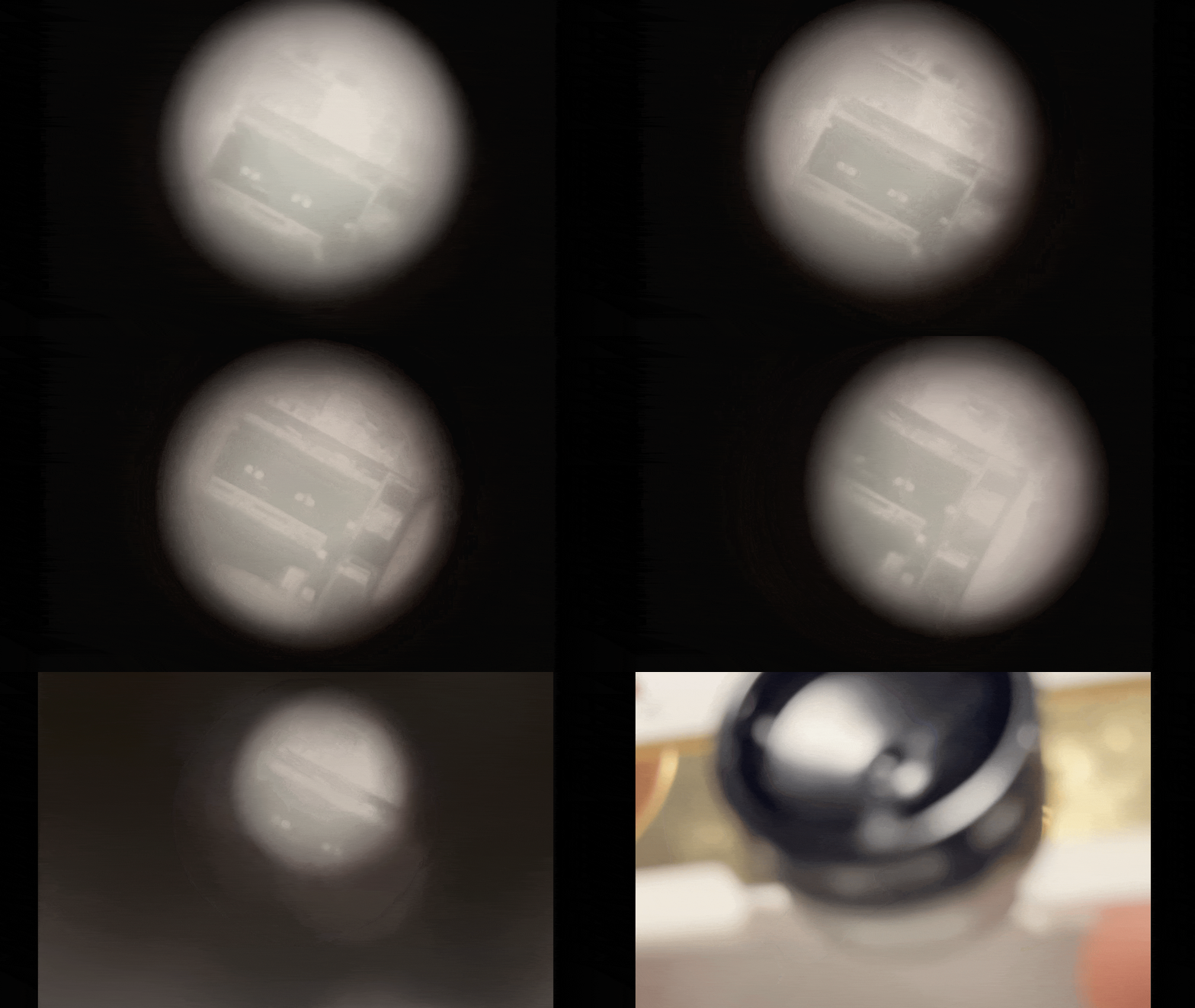
Field of View is the diameter of that spotlighted area
that you can see enlarged by the microscope.
Read on it's cool.
Thanks to a few of you asking, we realized yesterday that the three of us (CW+T+Miles) never properly sat down and characterized the Field of View of the microscope.
Field of View is the diameter of the area that gets enlarged by the microscope lens. And it turns out that demonstrating field of view is really helpful illustrating why this project is so awesome.
Support Pocket Fiche (but first read this)
In order to find our field of view, we figured we would just look through a fiche, aim at a recognizable region and then measure that region with a caliper. The fiche we used, is of Andrew Zuckerman's image of an elephant. We focused in on a region where the elephant's belly transitions to its back leg. Looking through the microscope, we see the tiny hairs coming off the elephant's body. But when we go to measure the region, we have NO idea where to put the calipers, because there is nothing my unaided eye can see other than the belly transitioning to the back leg.
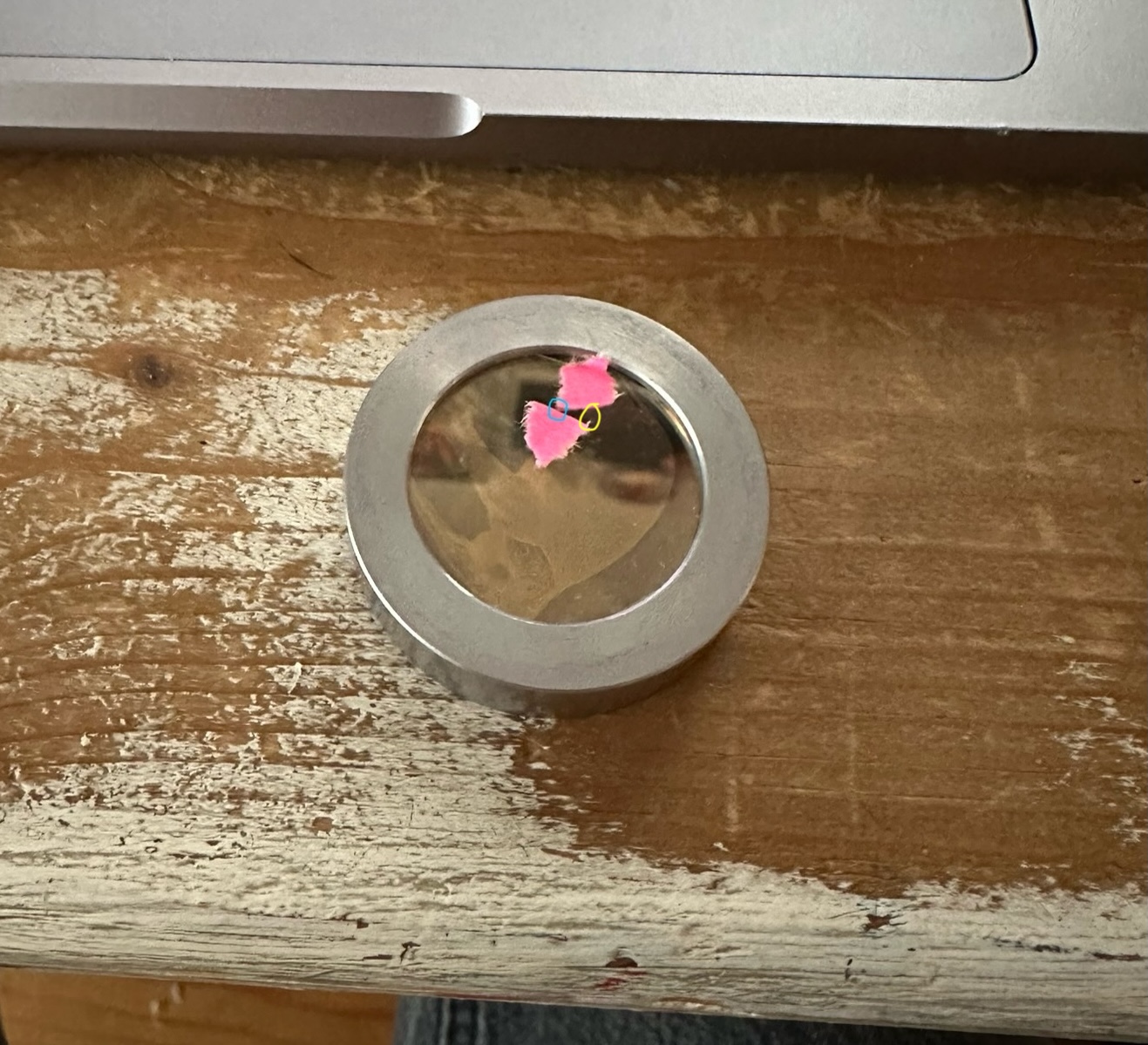
The area circled in yellow is where we tried measuring.
The area circled in blue is where we ended up measuring.
We put some tape around where we think we're looking. Then we look through the scope and see the tape framing the region we are hoping to measure. The yellow region in the above image was our guess. That area measured around 3mm. And it turned out that was WAY outside the field of view.
Instead of adjusting the tape we notice a small gap where the two pieces of tape almost meet (circled in blue). We look with the microscope and can get that almost intersection in the field of view. So it's a start. That gap measures around 0.6mm. But the tape hairs made it hard to be precise.
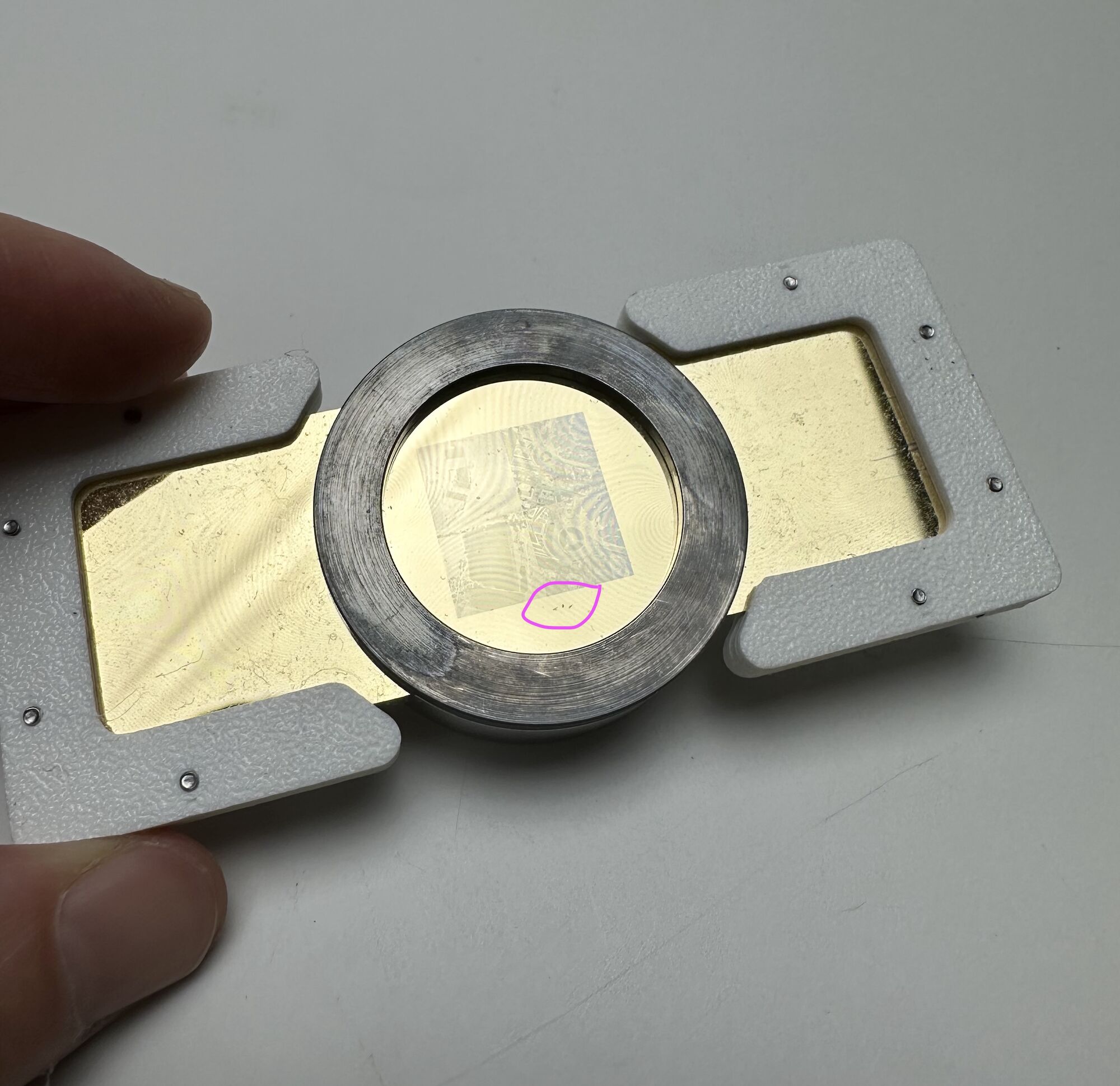
Three dots made with a pen on a slide.
This morning we woke up really wanting to try a few more (still rudimentary) ways of measuring FOV. First we tried printing some dots on paper, but couldn't get enough light through the paper or focus properly. Then we decide to just make some tiny dots with a pen on the surface of a slide and see if we could see and measure those.
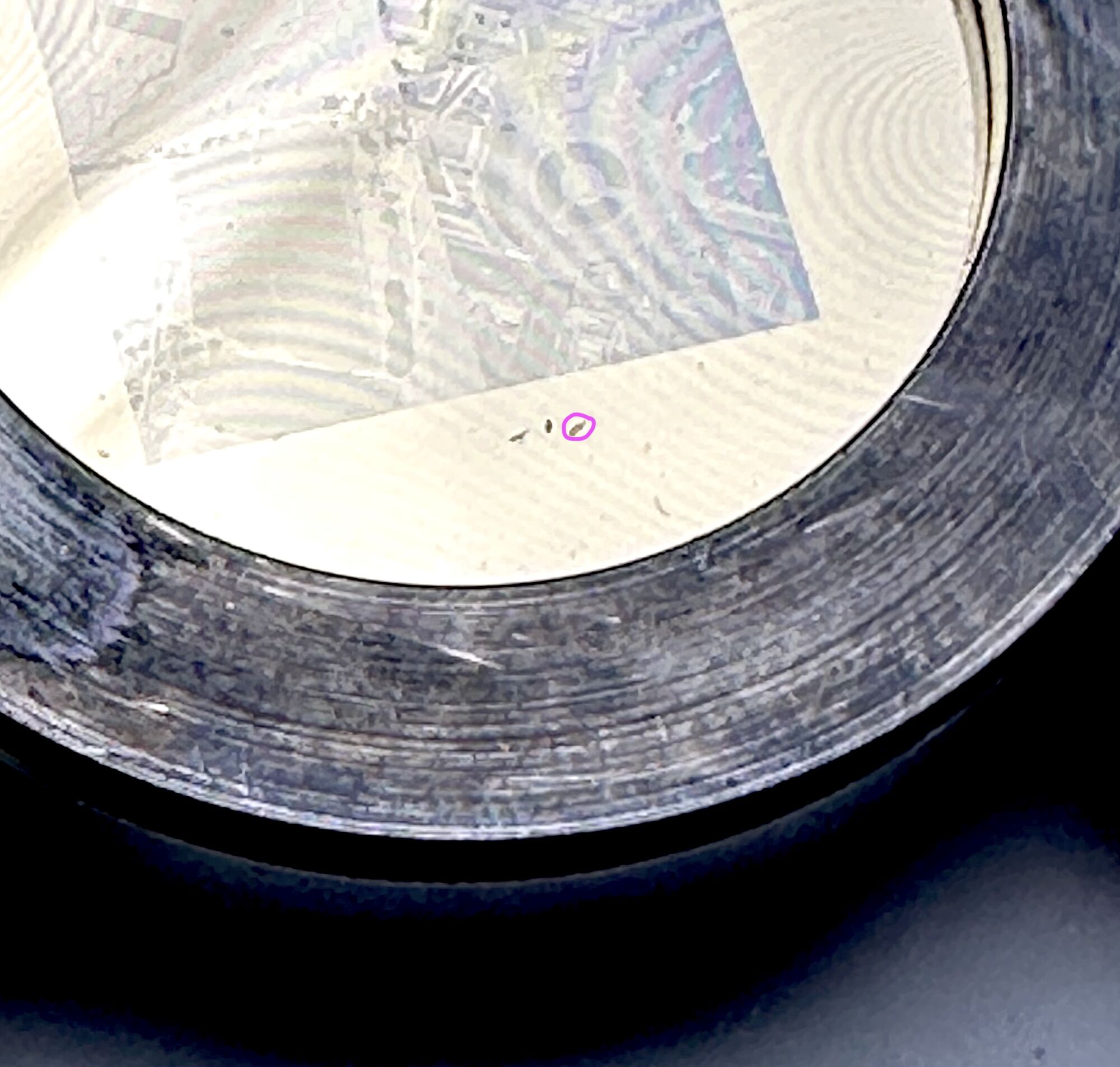
Zoomed in image of pen dot.
Under the microscope, the dots look like beautiful ink swirls even though they are tiny. The dot on the right is more like an elongated line, and it turns out that line spans the field of view. And when we measure it with calipers it comes out to around 0.5mm.
Here's a diagram that explains what this means in terms of Pocket Fiche + image resolution.
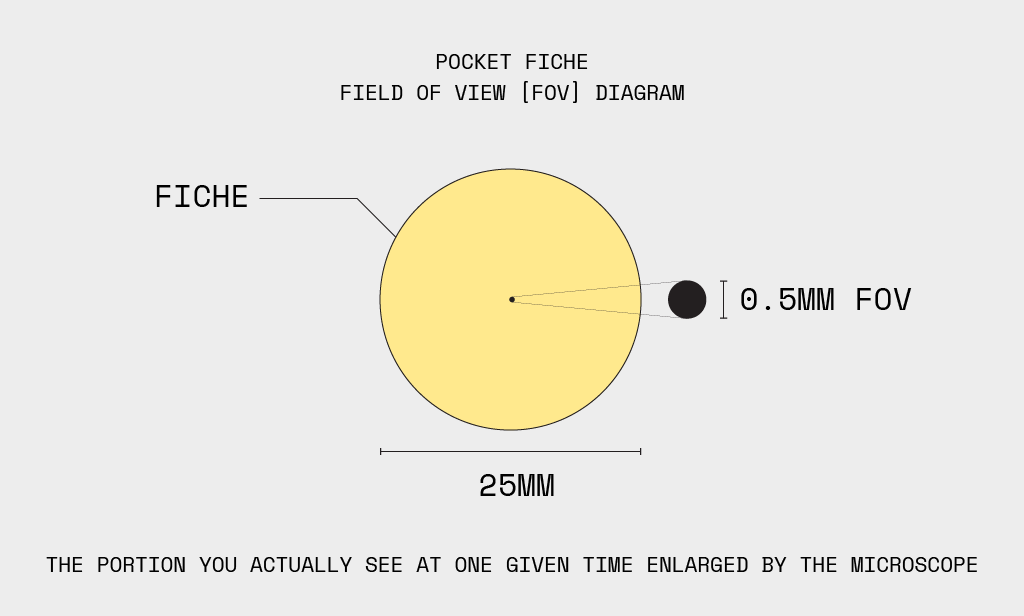
This diagram helps demonstrate how much of the fiche you see at any given time when looking through the microscope. For scale...25mm is around the size of a quarter.
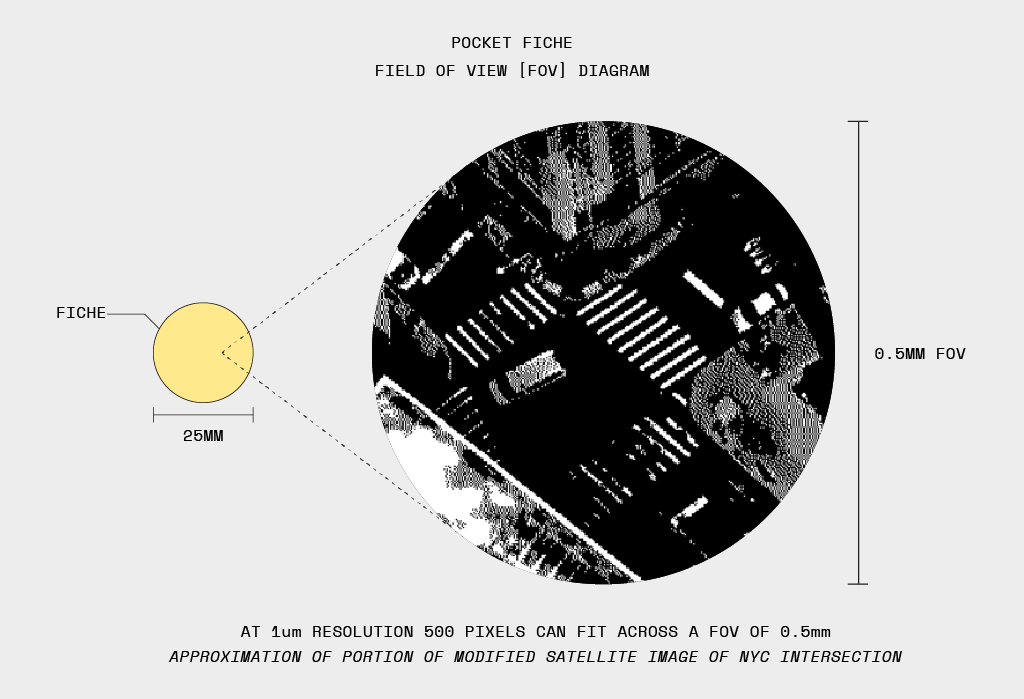
Diagram showing Pocket Fiche field of view as it relates to number of pixels visible at one time. So all of what you see on the right, is compressed down into that 0.5mm dot.
I just called Miles to confirm our measurements. Turns out he had done this already and had it written down somewhere. :)
The diagram above begins to communicate the mind blowingness of this project. If the print was at 1um resolution, there would be 500 pixels across a 0.5mm FOV. That is a conservative estimate and Miles' prints will probably be more in the range of 800-1000.
If you haven't, support Pocket Fiche on Kickstarter
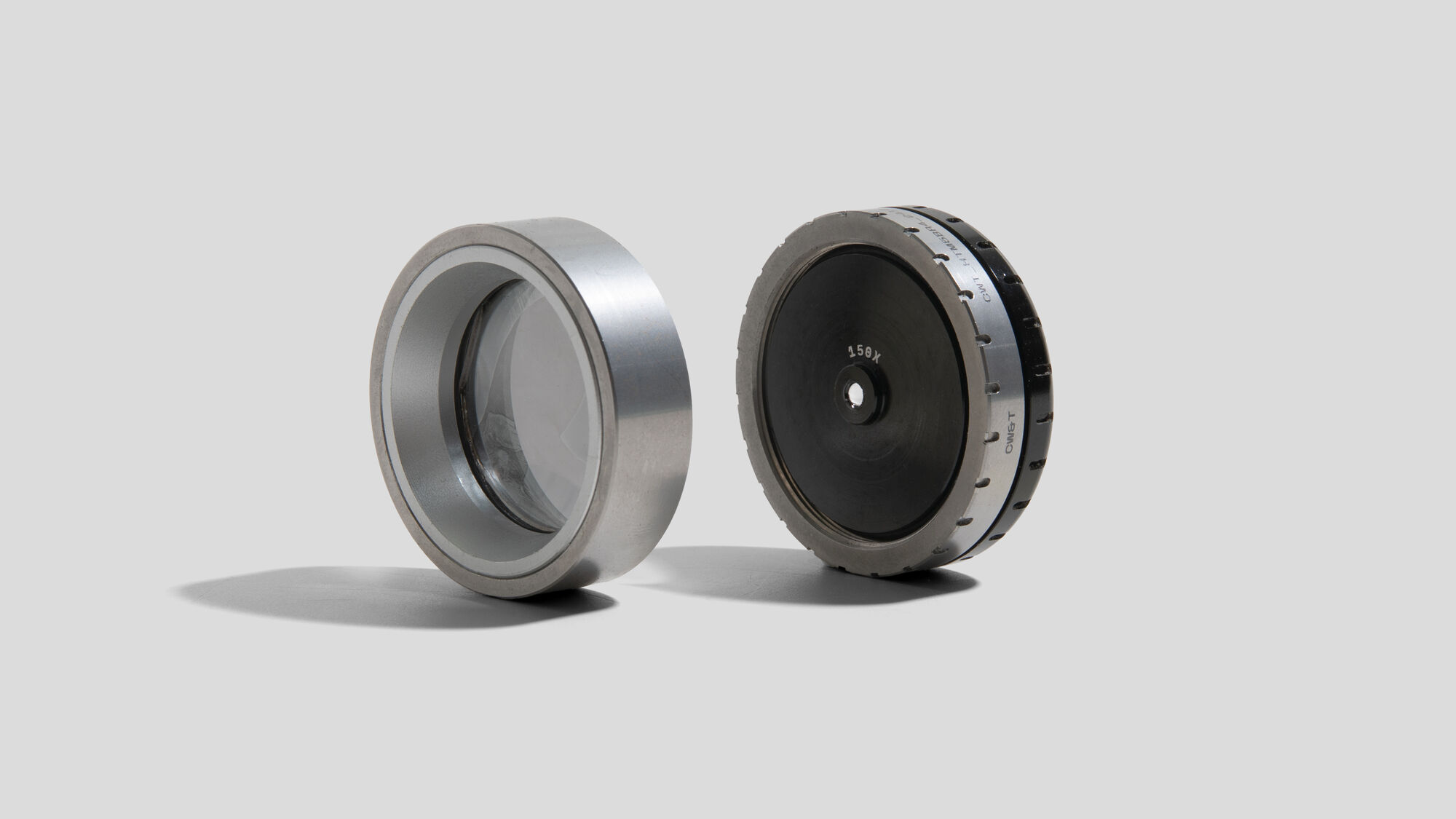
Pocket Fiche :the fiche portion [left] and the magnification portion [right].
We appreciate all the love and support yesterday. If you've messaged us ideas and some have already, thank you! you are all amazing and we'll get back to you soon.
With love and hugs,
Che-Wei + Taylor